| Home |
| Early Life |
| Maps |
| Oregon
Laws |
| The
Trail |
| Bush
Biography |
| Tumwater
Born |
| Thurston
County |
| State
History |
| Bush
Farm Today |
| FAQs |
| Timeline |
|
George
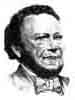
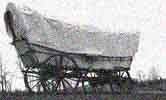
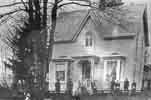
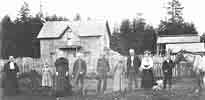
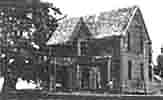
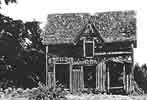
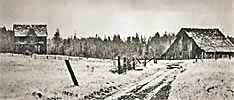
and Isabella Bush: Isabella James was born a Tennessee Baptist of German American extraction. Little is known about Isabella's childhood except that she was born sometime between 1804 and 1809 and that her father and one brother were ministers. Yet there must have been something extraordinary in her up‑bringing since she had the courage to marry a black man in the south of the United States in 1831. Perhaps Isabella's unorthodox marital choice was possible because George Washington Bush was such a striking and unusual man. He was quite capable of inspiring profound love and special daring. Isabella met George when he was around forty years of age. He had already lived a lifetime of independence and adventure and, as such, cut quite a romantic figure. George Bush was approximately six feet tall, broad shouldered and had a most imposing appearance. He weighed around one hundred and eighty pounds, had dark eyes, a roman nose, a heavy beard and a vigorous and dashing air. George must have been very physically attractive. Isabella trained as a nurse when she was a young woman. There is no record of whether or not she ever had the opportunity to practice her profession before she married. Isabella and George met in Tennessee where he spent some time after growing up in Pennsylvania and following years of living in the west. They soon married and moved to Missouri where George farmed and raised cattle. If he had not inherited money, he would still have become a wealthy man because he was a great success at farming. There, in Missouri, ten sons were born to George and Isabella in twelve years. However, only five of these children survived infancy. Their first son, William Owen, was born on the first anniversary of his parents' marriage. George and Isabella were married on July 4, 1831. Their second son, Jack, was born on July 24, 1834. Missouri was a "slave state" in a nation which legitimized one man owning another. Even though George Bush was legally a free man, and wealthy to boot, slave laws tended to denigrate everyone of the black race. "Free" blacks were in fact only "quasi‑free." For example, only four states allowed black male citizens to vote in 1830 and most northern states, as well as all the southern states, forbade marriage between the races. George and Isabella's oldest son, William Owen, was not permitted to attend public school in Missouri because he was "of color." The Bushes had to hire a private tutor in order to educate their children while their neighbors sent theirs to state supported schools. People in Missouri refused to sell George Bush many of the things he needed, they would not do him the "honor" of accepting his money. This was because most Southerners wished to discourage any influence that successful free blacks might have on their enslaved brethren. Surely George Washington Bush had made every effort to win acceptance from his fellow Missourians but it gradually became clear to him that it was not possible. Can one who has never been a slave or lived knowing his racial brothers were slaves, imagine how delightful it would be to shake the dust of such a damnable place as permitted slavery and move on? Therefore, any man who hoped for happy, peaceful lives for his family might eagerly accept the challenge of the frontier if it meant that it would be possible to achieve both respect and the certainty of freedom for his wife and children. In addition to all of this, Missouri was experiencing a severe drought. Any farmer's thoughts under these circumstances turn wistfully to farmlands where rainfall is more than reliable. It is also likely that even at fifty‑two, George Washington Bush was not immune to the excitement of the frontier and all that it meant in terms of adventure and fresh opportunity. In 1841, the first group of immigrants set out for Oregon Territory. In 1843, two hundred families crossed the country on the Oregon Trail. The Simmons‑Bush party left Missouri in the Spring of 1844. The little band whose roots lay in Tennessee and Missouri joined a "train" for the Willamette Valley which totaled eighty wagons. The Bush family started the journey with 40 six Conestoga wagons filled with supplies for the trip. They carried seeds, farm implements, livestock, and even live trees for their new home in the west. George and Isabella brought along the seeds for cherry, plum, prune, pear, and crabapple trees but they brought small poplar and quince trees with them. George thought that the poplars might be needed as windbreaks and that the quince trees were too lovely and the tarts and jellies made from their fruit too irreplaceable to leave behind. The Bushes brought white porcelain platters, iron pots, and the special hooks to lift those pots off the fireplace across the plains. Valuing education as they did, George and Isabella probably brought more books than the traditional pioneer library which consisted of only the Bible and a dictionary. It was even rumored that George and Isabella carried one hundred pounds of silver, some gold bricks, and a number of $50.00 "slugs" concealed in a false bottom of one of their wagons. A $50.00 slug was a piece of gold, shaped in an octagon and, while not United States currency, did circulate widely where currency was scarce. The people who made up the Simmons‑Bush party were all either good friends or related to one another. Michael Troutman Simmons, the group's co‑leader, was from Newmarket, Tennessee. His wife was the former Elizabeth Kindred. One of Simmons' sisters was married to James McAllister. Isabella James's family was also from Newmarket, Tennessee. The Simmons and the McAllister families may have had the means to afford the trip. Some of the others who wished to accompany them however, did not have sufficient resources. George helped make it possible for the families of David Kindred, the parents of Elizabeth Kindred Simmons, and Gabriel Jones to make the move. Some sources state that George Bush furnished even the wagons in which the McAllisters and the Kindreds made the journey. Three single men also joined the caravan: Samuel Crockett, Reuben Crowder, and Jesse Ferguson, Five Bush boys made the trip with their parents: William Owen, Thomas Jack, Joseph Tolbert, Rial Bailey, and Henry Sanford. There seems to have been some confusion about the name of the Bush's second son. In one manuscript he is alternately referred to as "Tom" and "Jack," hence "Thomas Jack." George and Isabella planned their move west with the same Intelligence and attention to detail that had made them successful farmers in Missouri. They collected sufficient food and supplies to enable them to share their bounty with friends of either less foresight or resources during the difficult journey. Isabella's nursing skills came to be dearly valued by everyone in the wagon train. Whenever anyone fell ill or was injured along the way, they turned to Isabella Bush for help. Her kindliness and sure knowledge cured all who could be cured. The reputation which Isabella earned on that cross-country trip as a vigorous and excellent nurse remained with her throughout her life. At one time or another she nursed everyone in the community who settled in and around Tumwater. Before it was known as Tumwater however, the community was called "Newmarket" by Michael Simmons after the little town they had all known as home in Tennessee. In 1845 the Oregon Territorial legislature passed a law forbidding slavery in the territory but at the same time seeking to insure there would be no permanent settlement of free blacks in the region. The law stated that any black who settled in Oregon would be subject to thirty-nine whip lashes for every two year period in which he or she remained in the territory. Oregon did not invent this kind of cruelty. Illinois had passed similar legislation earlier. During July of 1845, Michael Simmons traveled over much of western Washington. When he came upon the falls of the Deschutes River, at the point where the falls drop into Puget Sound, he felt that he had located the party's new home. The power that these falls generated would make it possible for the settlers to grind the wheat they would grow. Later they might build a sawmill which would give them a source of cash through the manufacture and sale of forest products. Beyond the splendid potentialities of the falls, the existence of the British outpost, Fort Nisqually, and the Puget Sound Agricultural Company meant there would be some additional human buffer between the small Simmons-Bush group and the complete wilderness, If the Hudson Bay Company could be persuaded to help the settlers rather than remaining adamantly opposed to any American settlements north of the Columbia, then this new journey to an even more remote corner of this country would result in a perfect home for all of them and a secure sanctuary for Isabella, George, and their children Elizabeth Kindred Simmons' father and mother remained in Oregon. During the last week of September, the entire group, except for the elder Kindreds, left for the home Michael had explored for them. No portion of their journey thus far had been so arduous. It took fifteen days to move the light, stagecoach-like transports known as "Mud-wagons" they now traveled in the fifty-eight miles through the dense forests of western Washington. They had to cut a road through the woods from Cowlitz Landing onward. Elizabeth Simmons had given birth to Christopher Columbus Simmons only two months before this final push and she and the other young mothers suffered the rigors of the last leg of their trip more intensely than any part of the journey to that point. For the first time hunger was a part of the equation and the children wept from the pain of it. When they reached the prairie between the Cowlitz River and Puget Sound they first constructed the large communal house which was forty feet long and twenty feet wide. This was to ensure that they would all have some shelter while each family's claim was searched out and a house constructed on it. The group had temporarily adopted the local Indian style of living and the children of all these pioneers, when they were grown, maintained that the days of living and eating just exactly like the Indian people were the happiest and most rewarding days of childhood. The settlers all loved their comfortable beds made of cedar with the branches knocked off and each covered with three or four Indian mats. These mats, along with furs and a few horses, were given to the group by Leschi of the Nisquallys as a gift of welcome. Following the Indians' example, the settlers used the smooth, brown woven mats to cover the cedar boughs of their beds and also to tack over the walls of their homes as insulation against the penetrating winds and damp. The bedding was kept sweet-smelling by frequent renewal of the cedar and bracken stuffings. The night lamps burned the smelly fish-oil which the Indians provided. White children quickly adjusted to, and became very fond of, all the Indian food-stuffs. Nisqually hospitality helped the Simmons-Bush party endure their first winter on Puget Sound. That first winter was very cold. The survival of every member of the Simmons-Bush party came to rest on the assistance extended to them by Dr. McLoughlin of Fort Vancouver of the Hudson Bay Company as well as the native peoples. Dr. McLoughlin had originally tried to dissuade them from their course but when he saw that the group was determined to settle north of the Columbia, he felt that he must help them. Michael Simmons was given a letter to take to Dr. Tolmie at Fort Nisqually. Dated September 27, 1845, it read: "Dr. Tolmie, The Bush home became a way station on the route between Cowlitz Landing and the Sound. Seattle's first settler passed through the region in 1849; that was John Holgate and he stopped with the Bush family. Most of the people who traveled through the territory were the guests of the black man of Bush Prairie and his charming wife at one time or another. Some visitors stayed for dinner; others stayed overnight or even for two or three days. It was impossible for anyone to feel he had overstayed his welcome, so genial were the hosts. In 1850, Congress passed the "Donation Land Law." That law provided any white man or "halfbreed," (that is, half-white and half-Indian) with the right to claim a half-section of land. If a woman was married, she could claim an equal amount in her name in order to provide every family unit with an entire section. The Donation Land Law left George Bush unable to claim any land in his own name or in that of his children. However it was also true that under the law title could not be given to anyone until a treaty was negotiated with the Indians. This was because until a treaty was negotiated, the United States did not have the title to give. George and Isabella were concerned about these developments. George submitted his claim, but under the law, his claim was denied. The reason given for this in 1850 was ". . no man through whose veins there coursed a drop of African blood could become a homesteader of Uncle Sam's." The Bush family knew they could meet any of the substantive requirements which others had to meet to qualify for title. They would have no trouble showing their permanent dwelling on, and continuous working of, the land. But what could they do about the problem of title of land for a black man? What could George and Isabella do about their desire to pass the land they had worked so hard on to their children? When the Simmons-Bush group first arrived to settle the region, they had been forced to cut a trail through the woods from Cowlitz Landing to Bush Prairie in order to get their wagons through. This primitive path became the traveled route, known as an established "trail and wagon road." Whenever a new wagon train of hungry, exhausted settlers arrived in the vicinity, "Old Mike Simmons," George Bush, and some of the other original settlers would meet the new group with flour, onions, potatoes, and homemade huckleberry puddings and pies. George built about a dozen little log cabins on his land where the new settlers might stay until they located a spot where they wished to stake their own claim. He wouldn't have dreamed of charging any of them rent, regardless of what their opinion of a black man might be. All hungry travelers were made welcome and greeted with hospitality. On one occasion a train had become lost on its way through the mountains and as a result, their trip had taken them much longer than planned. The terrible winter of ‘52 caught this unfortunate group still in the mountains so that when they finally arrived at Puget Sound, they were terribly frozen and near starvation. George and Isabella fed the entire group for quite some time because the Bushes were the only people in the area with any surplus food. The Bush’s attitude was that any repayment was unnecessary. What they did hope was that those people they had helped would show similar generosity to others in their turn. George and Isabella never sold anything to newcomers. George told these people he could attach no price to food he gave them but that they might return what they wished when they were able. "Return it when you can," George would say and George and Isabella fed a great many hungry people over the years. It did not seem to matter that George Bush’s oath was not accepted or that it would take a special act of Congress to give him legal title to his farm. His selfless attitude earned George the respect and affection of his neighbors, partly on account of his race. People saw him as a genuine folk hero. Whatever was the inspiration for frontier generosity, there are many instances of it in operation. The "Denny party" founded the city of Seattle farther north on the Sound in 1852. The first few years of that settlement saw great hunger there too. Some speculators came down to Olympia from Seattle for the purpose of buying any surplus wheat and bringing it back to the infant city to sell at greatly inflated prices. George Bush quickly saw who he was dealing with and though he stood to make a huge profit, refused to sell any flour to these men. He saved his surplus for the needy and sold it to them at a fair price. Making money in the exchange was of little interest to George and Isabella. Perhaps this was because they had brought money with them across the plains and found little use for it on the frontier. After all, there was really nothing to buy and even if there had been, greed was an emotion foreign to both George and Isabella. Conditions remained difficult even on the successful Bush family farm for many years. When he was a grown man, Lewis Nisqually, the child born on Bush Prairie wrote, "Yes, those were hard times. We all had to scramble for enough to eat. There was simply nothing we could buy from any market for several years. I remember one summer day an old squaw came to our house with something to eat which she wanted to sell. Mother tried to dicker with her but she only wanted clothes. Money was of no use to her. She wanted a shirt for one of her papooses. Now, we had been away from home for a long time and clothing was getting scarce, but mother wanted whatever it was the squaw had so badly that she stripped the shirt off my brother Sandford’s back and gave it to the siwash." Apparently, there were items of food which Isabella could not raise on her farm herself and which she felt her family had need of. It is not possible to tell from Lewis’ narrative whether it was hunger, generosity, a desire to please the Indian woman, or the fear of not pleasing her which motivated Isabella to trade the shirt off her son’s back. It may have been that all these thoughts flashed through Isabella’s mind at the moment but whatever the reason, her reaction was quite direct. It was not the cost which kept some items from the Bush table since the Bushes were universally believed to have a great deal of cash. Certain foods were dear because they were scare. In those days, eggs were $1 per dozen and butter was $1 per pound. Potatoes were $3 per bushel and onions, $4. Single men who worked in the woods butting received their board and $4 per day. When one compares the going wages with the cost of food, the true cost becomes apparent. In 1850, George had a fanning mill brought around the Horn for use on this farm. He also made the mill available to his neighbors for their use. This machinery separated the chaff, husks, and dirt from the wheat. Afterwards, all the wheat produced in the general vicinity was stored in the Bush granary until it could be sold. George had quite a reputation as a stock raiser in addition to that as a wheat farmer, but in this he was surely assisted by the nursing and nurturing talents of Isabella Isaac Ingalls Stevens stayed at the Bush farm on his first trip through Washington Territory in 1853. Washington was then newly separated from Oregon Territory. He was on his way to Olympia. Stevens had just been appointed Governor of Washington Territory and he was traveling to the capital which he himself had selected. Olympia was the obvious choice as the capital of the new territory since it lay at the center of the existing population distribution. Isaac Stevens, being new to his office, was sensitive to the dignity of the Territory. He felt it incumbent upon him, as the authorized representative of the federal government, to pay for his meal. But neither George nor Isabella had ever accepted any payment for their hospitality and they certainly would not begin with the Governor of their new territory. Legend has it that to save embarrassment all around, Stevens hid a twenty dollar gold piece under his dinner plate and left it there for the Bush family. This gold piece was found later, but never spent. It became a family souvenir. In 1853, there were seventeen families farming on Bush Prairie. There were the original and now familiar Bush, Jones, Kindred, and Ferguson families. In the intervening eight years between 1845 and 1853, they had been joined by the Dullnaps, the Riders, the Kunes, Rutledges, Gordons, Carnells, Johnsons, Candells, Littlejohns, and the Judsons. The new Legislature of the Territory was called into session for the first time in February of 1854. Olympia was quickly laid out and a number of wide streets planted with maple trees in order to offer the legislators a fitting location for their deliberations. Local citizens built some frame houses to rent out to the visiting dignitaries. Before long, a small city stood on the quiet south end of Puget Sound, complete with churches and schools and the best intellectual and social life in the Territory. H.A. Goldsborough and Michael T. Simmons sold real estate in Olympia and the town had a permanent population of about one hundred. One of the first orders of business of this legislature, within the very first month of its meeting, was to memorialize Congress to grant George Bush and his heirs title to his claim on Bush Prairie. The possibility of land ownership for free blacks had been intentionally omitted from the language of the Donation Land Law. The Legislature of Washington Territory stated in its request to Congress that Bush had been industrious, charitable, helpful to those less fortunate than he, a first-rate farmer, and had practiced all of these virtues on his claim in the territory for many years. Some of Bush’s friends attempted to push through legislation which would award Bush full citizenship at the same time as he was given title to his land, but while the first request was readily agreed to by the United States Congress in January, 1855, the matter of citizenship did not succeed in passing the territorial legislature. Apparently, a majority of the representatives of the citizens of the territory were against equality for anyone of the black race, even for so worthy an individual as George Bush. There is no record as to whether the Bush family was grateful for what it did receive or angry over what it did not. The only indication of how the family might have felt was that they remained on their farm and continued to live exactly as they had before. George was given title to the land he had worked for better than ten years when he was approximately sixty-four years old. Shortly before George Bush became the beneficiary of the special legislation awarding him ownership to the land he and his family had labored on for many years, Governor Stevens assumed responsibility for securing title to the United States of all the land in Washington Territory. England and the United States had agreed in 1846 that the border between their respective properties should be at the 49th parallel. Stevens’ job, therefore, was to make peace with the indigenous peoples within the new borders while acquiring their lands. On December 5, 1854, Stevens announced that he believed the time had come for a settlement with the Indians. By the end of the same month, he had completed treaties with all the tribes around the Sound. The speed with which these treaties was concluded certainly appears to have been both unseemly and coercive. Many native people balked at the terms. Leschi, Chief of the Nisquallys, refused to sign. Michael Simmons had been appointed Indian Agent and he had assisted Stevens in working out the details of the treaties. When Simmons heard that his old friend Leschi refused to have any part in the conclusion of the agreements, he is quoted as having said, "Damn them, if they don’t sign, I’ll do it for them." And indeed, while Leschi’s name appears as the third signature of the Treaty of Medicine Creek, it is generally regarded as a forgery. According to all the eyewitnesses, Leschi would not sign. In any event, Leschi marshaled a force against the settlers of Nisqually, Puyallups, and up-river Duwamish. This latter group was related by marriage to Chief Sealth of Seattle fame. However, they were more independent than their down-river relatives. It is uncertain just what the rebellious natives could realistically hope to achieve, especially since they did not wish to harm their friends. As John Hiton, the Indian friend of the Bush family and many other whites is reported to have said, "…what’s the use for Indians to fight whites? Whites get big guns; lot ammunition; kill off all soldiers, more come…" Lewis Nisqually Bush told Ezra Meeker that, "the Indians sent us word not to be afraid – that they would not harm us. I had lived among the Indians from childhood and in fact had learned to talk the Indian language before I could speak my mother tongue. At that time, I believe there were twenty Indians to where there is one now. Most of the Indians were friendly. Had it been otherwise they could have wiped out the settlement completely, in spite of the military and volunteers. Yes, and not left a grease spot of them…" Volunteer groups organized themselves in response to the new Indian hostility. John McAllister, that adventurer who took his wife to live in a tree stump and danced for the Haidas, now became a lieutenant in "Eaton’s Rangers." McAllister was one of a very few whites who lost their lives in the episode which came to be known as "The Indian War of 1855, ’56." We have an accurate picture
of what that was like from Lewis
Nisqually. He reported on the entire
family’s recollections of the mood and
events of the time. He wrote…. Sapplings probably fourteen feet long were cut from the woods and a trench dug several feet deep. In this trench was set upright the saplings in a double row clear around the enclosure. This made a high wall which was practically bullet proof. Inside this enclosure were the cabins of the settlers – each by themselves. We were comfortable enough and lived that way for several months. This fort was also known as Bush’s fort." The Nisqually chief finally let it be known that if his people were assured enough land on which to raise the potatoes with which to feed themselves, they would withdraw and the whites could have the remainder. What Leschi did not appreciate was that he had earned Stevens’ undying animosity as the man who had cast a blemish on his record. On January 19, 1856, Governor Stevens declared that the war would be prosecuted until the last hostile Indian had been exterminated. Leschi’s fate was sealed. The Olympia newspaper supported Stevens’ hatred by keeping leschi’s peace efforts secret. The result of the suppression of information was that the general population had no choice but to support the governor in his war to win decisive and complete victory over the Indians. Stevens never forgave Leschi for his opposition. The Nisqually chief eventually hung for his role in the war. The defeat of the Indians was indeed complete. Only a few years later, pioneers who remembered the native peoples as they had been would make statements like the one which follows, "When I look at the drunken vagabonds of what is now called Indians, I can scarcely realize that they are the same people I was raised among." They were a people entirely demoralized. Life on the Bush farm went on quietly through the national turbulence of the late 50’s with food production increasing every year on the intelligently, lovingly run farm. The family continued to maintain their close relationships with the Indian people. The countryside remained a profound, beautiful and bounteous wilderness. The Bush boys could shoot duck while standing in the doorway of their cabin home. National holidays were celebrated in western Washington just as they were in the rest of the country. On Decoration Day, everyone went to some cemetery to honor their dead, but a joyous afternoon picnic was usually held to brush away the sadness of the more solemn morning. Every "Fourth of July," there was a giant barbeque on the Bush place. People came from all over the Sound to gorge themselves on meat and clams and everything that "went with." People from as far away as Seattle would come for the festivities. George and Isabella counted the Henry Yeslers among their friends. After the feast, there was the inevitable "program" of patriotic recitations and singing, a pleasure belonging to simpler days. The Bush farm was ever the hub of activity; on holidays for merrymaking and on other days for friendly helping hands and kind comfort. George and Isabella labored ceaselessly to make the farm yield and flourish. Yet, in the midst of all their efforts, there were some occasional social events beyond their festivities which they themselves instituted. There was the "grand ball," an event which necessitated the gathering up of women from all over the Sound. This was because women were scarce on the frontier and if one wished to dance, it was inevitably going to take some effort to arrange it. A steamer was sent to every town which could be reached by water to collect the ladies and a ball, therefore, meant a respite of at least several days from the normal round of hard work. Even with the distress caused by the shortage of women, there were many people, even at that early date in Washington history, who favored what we know as a desire for a "lesser Washington." Those who were here faced a very hard life. Whenever there was any suffering to be done, women suffered right along with the men. Yet, despite difficulties and loneliness, many settlers felt that there would be hunger, crime and vice in proportion to the numbers who came to Puget Sound. Prostitution arrived in Seattle just two years after the Denny party landed at Alki. The original settlers who lived all around the Sound found that the problems which came with civilization caused them more pain than all that was endured in pioneering the wilderness. All through the long, hard years, the six Bush sons were growing up. In 1859, William Owen, the oldest was twenty-seven years old. He married a white woman named Mandane Kimsey and they had three children. When Owen and Mandane were first married they started their own farm near the family home in Thurston County. They named one of the sons George, in honor of his beloved and revered grandfather. Owen was as respected for his integrity and charitable nature as was his father before him. He was a sweet-tempered man and was never known to have uttered a single cross word. Owen was very successful on his own, both as a skillful farmer and in the logging business. He made substantial contributions to facilitate the establishment of St. Peter’s Hospital in Olympia. When George Bush died very suddenly in 1863, Owen and Mandane and their children returned to the Bush homestead to work there because Owen’s steady hand and wise head were needed at the family home. Under Owen’s direction, the Bush farm increased in value and production. At one time, the Bush barn was the largest in Thurston County. They raised beef cattle, milk cows, barley, wheat, oats, and horses. Owen became president of the Washington Industrial Association in 1877 and was the first "black" man, although he was the mulatto son of a mulatto father, elected to the Washington Territorial legislature in 1889. Jack, as he was generally known, was the second son. He grew to be the tallest of all the boys and was familiar to many people all over the territory because of his height. All the boys in the family received a good, basic education from their tutor, Mr. Hunt. Mr. Hunt lived on the farm with the Bushes for many years. Jack was not interested in work, he lived to play music. He was a difficult person to get along with and, of his brothers, only Henry Sanford was his continuous friend. Although Jack disliked farm work, he did sometimes help out a widow who lived near his father’s farm. No son of Isabella and George was without a charitable aspect to his nature, even the maverick of the bunch. Jack was the only one of the boys to go to college. Attending college was a rare thing indeed in those days, but George and Isabella sent him to Portland University so he could study music. He played the violin and the guitar. Years after the deaths of his parents, Jack and a cousin from Centralia named John Mills played in a dance orchestra which provided the music in Tom Pennells’ famous Seattle brothel, the "Illahee." Jack and Owen were the only two of the six Bush sons to ever marry. Rial Bailey died young. Joseph Tolbert, Henry Sanford, and Lewis Nisqually remained on the farm with their parents. The farm continued to prosper. In their later years, George and Isabella most certainly had the means to build a larger, finer and more comfortable house. Nevertheless, they remained content to live in their original home. George and Isabella never abandoned their habit of providing help to those old and new neighbors who were in need. In 1863 George died suddenly of a cerebral hemorrhage. At the end, he had not time to tell anyone, not even his dear wife Isabella, where the family’s money was buried. Many years before, George had taken the silver which they had brought across the country from Missouri and the excess cash accumulated during their life in Washington Territory and buried it in a secret location on the farm. It was a pity that despite their long and felicitous years together, George kept the place where he had hidden his wealth secret, even from Isabella. He was, after all, a man of his times. George surely would have wished his wife and children some ease but his death denied the benefits of all that money to them. He never regained consciousness after the instant in which he was stricken and that kept his secret forever. Judge Hewitt had always done all the legal work for the family, but even he had not a clue as to where the money might be buried. Isabella would just have to forget it and go on. She did just that until her death in 1866. After his father died, Owen had a newer and bigger house built from split cedar. This home remained standing alongside the Olympia airport until it was torn down in 1974. The descendants of Isabella James Bush lived on in the Bush homestead for one hundred years. The family tree is documented in "Family Records of Washington Pioneer" by the Daughters of the American Revolution without any allusion to the fact of the family’s racial origins. Updated: 03/04/08 |